Los Angeles apartment fundamentals are projected to hold firm through the end of 2026, supported by one of the most diversified metro economies in the country. Healthcare, entertainment, finance, and education all feed jobs and renter demand, so a slowdown in any single sector is unlikely to shift the overall market much. Matthew Krasinski, Senior Regional Sales Manager at Chase, points to that diversity as the reason the metro has proven so resilient.
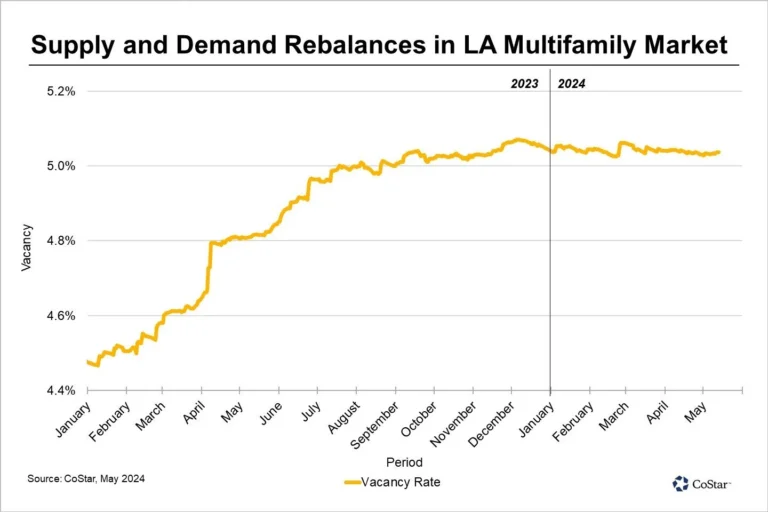
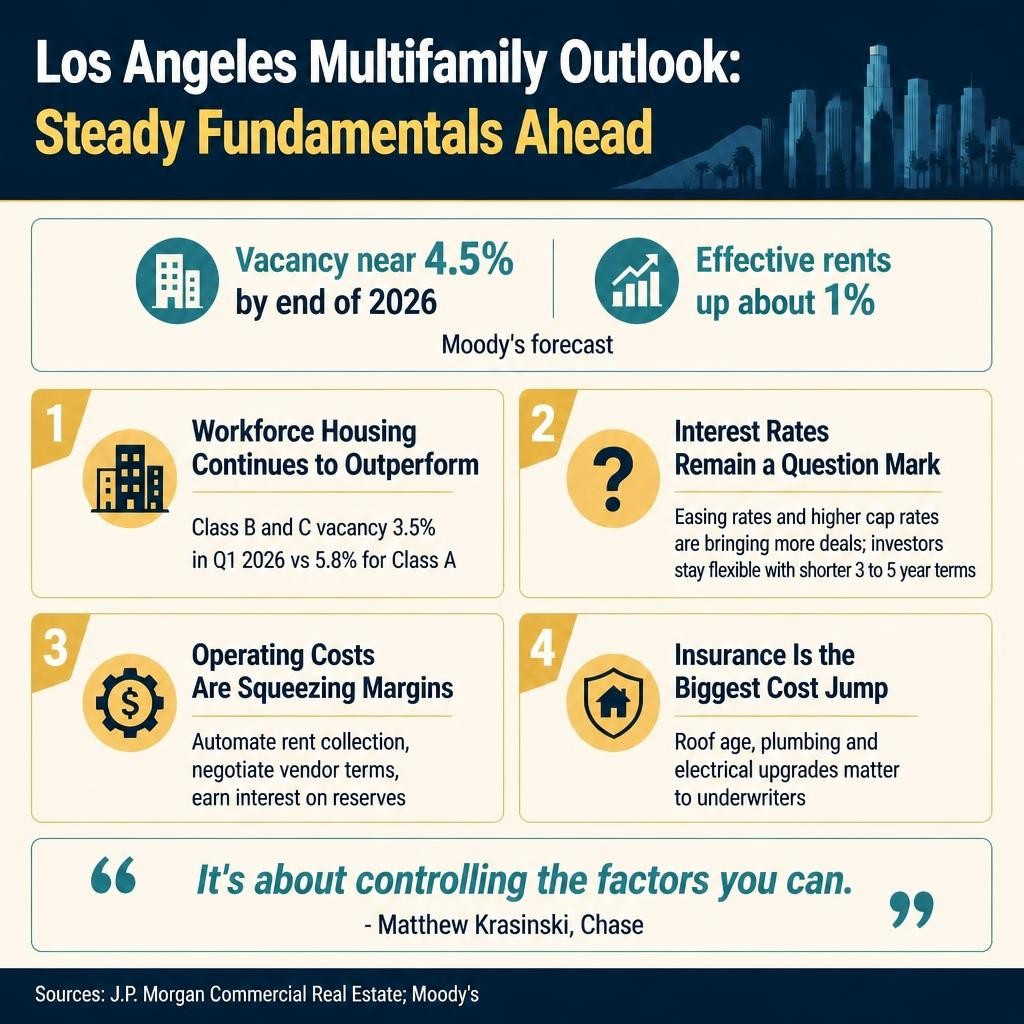
Moody’s forecasts vacancy leveling off near 4.5% by the end of 2026, with effective rents rising roughly 1% over the prior year.
Workforce Housing Continues to Outperform
Population growth cooled in 2025, and a near-term rebound isn’t expected. Lu Chen, Senior Economist at Moody’s, cites several overlapping factors: tighter immigration enforcement, tension around policing, and steady domestic out-migration linked to wildfire recovery, changes in the entertainment industry, and ongoing affordability pressure.
The effects haven’t been evenly distributed. Workforce and affordable apartments have held up better, with Class B and C vacancy at 3.5% in Q1 2026 compared with 5.8% for Class A. Lynnette Antosh, also a Senior Regional Sales Manager at Chase, notes that many owners now prefer to work with an existing tenant to keep them in place, since turning a unit has become more expensive.
Interest Rates Remain a Question Mark
Easing rates and somewhat higher cap rates are bringing more deals to market. Krasinski observes that the last two years of sales were largely event-driven, and that modest shifts in pricing, rates, and offers are now surfacing more buying opportunities.
The Federal Reserve is still balancing price stability against employment, which leaves the rate path unclear. Many investors are staying flexible: some are holding the floating-rate portion of their loans rather than refinancing, while others are choosing shorter three- to five-year terms. Borrowers are also watching rate volatility more closely than they used to.
Operating Costs Are Squeezing Margins
Higher expenses make cash management more important. Owners can speed up collections with automated rent payments, negotiate longer terms with vendors, and earn interest on operating reserves. Antosh notes that working with specialists who understand owner-operators can help put capital to better use, and that fraud-prevention tools and up-to-date cybersecurity practices are worth maintaining.
Insurance Is the Biggest Cost Jump
Management and maintenance costs are up across the board, but insurance premiums have climbed the most. Underwriters look closely at building condition, including roof age, plumbing, and electrical upgrades. As Krasinski puts it, “It’s about controlling the factors you can.”
The Takeaway for Los Angeles Multifamily Owners and Investors
A diversified economy, tight Class B and C vacancy, and a forecast of stable rents all support the case for Los Angeles multifamily, even with population growth soft and rates uncertain. For owners, the priorities are keeping good tenants, managing cash carefully, and keeping building systems in shape for insurers. For investors, a slightly better-priced market is bringing more opportunities, and flexible financing is the common strategy.
Sources: J.P. Morgan Commercial Real Estate (insights from Matthew Krasinski and Lynnette Antosh); Moody’s (Lu Chen; vacancy and rent forecasts).