
Selling a Rent-Controlled Apartment Building in Los Angeles and the South Bay
Rent-controlled apartment buildings sell every month in Los Angeles and the South Bay. Buyers simply price them differently. They look harder at in-place rents, at how often units turn over, and at how fast expenses can grow against a capped income. If you know which rules apply to your building and what buyers will ask for, you can go to market prepared instead of finding out in escrow.
First, know which rules apply to your building
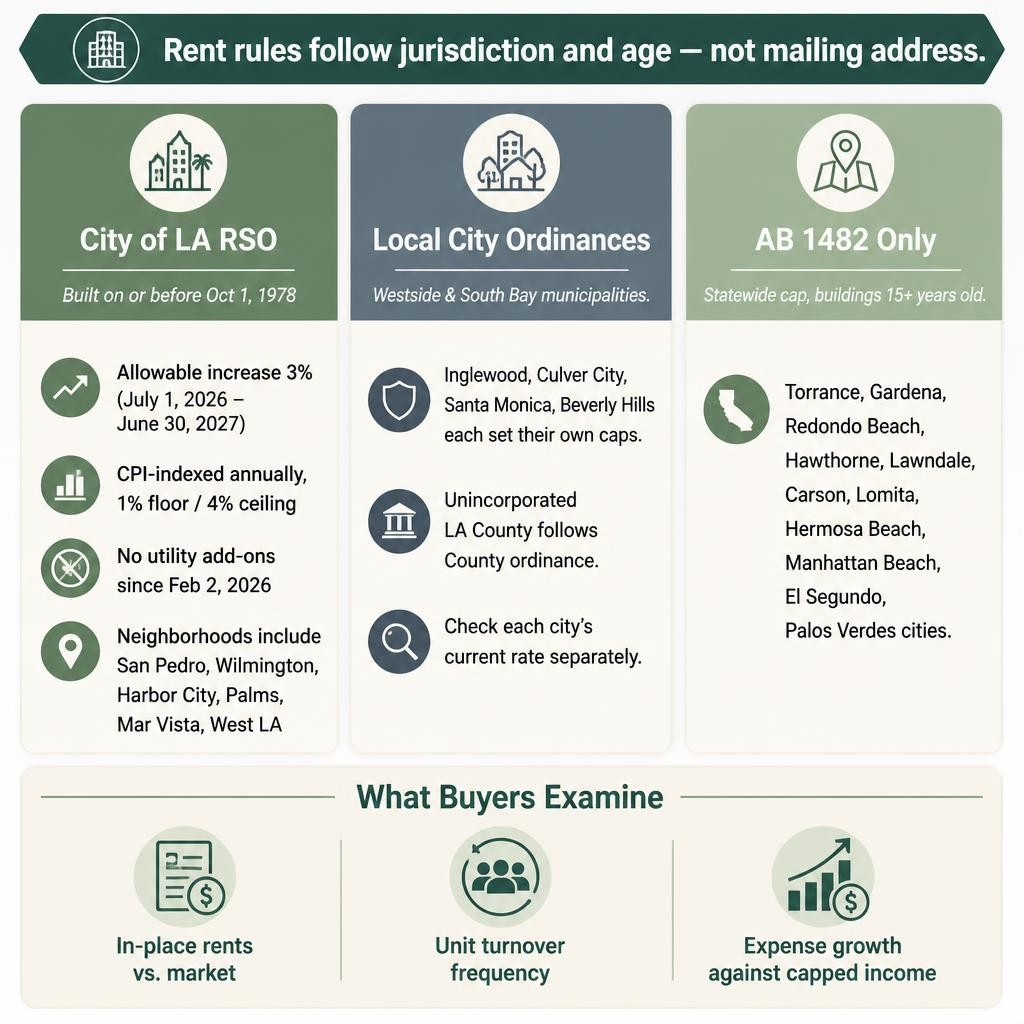
Rent rules follow the property’s legal jurisdiction and age, not the mailing address. Most owners fall into one of three groups:
- City of Los Angeles RSO: buildings in the City of LA first built on or before October 1, 1978. That includes San Pedro, Wilmington, Harbor City and Westside neighborhoods like Palms, Mar Vista and West LA. The allowable increase is 3% from July 1, 2026 through June 30, 2027. It’s set each year from CPI, with a 1% floor and a 4% ceiling, and since February 2, 2026 it no longer allows extra percentages for utilities. LAHD explains which units the RSO covers.
- Other local ordinances: Inglewood, Culver City, Santa Monica and Beverly Hills have their own rent rules (the Westside caps are below), and unincorporated pockets of LA County fall under the County’s ordinance.
- AB 1482 only: Torrance, Gardena, Redondo Beach, Hawthorne, Lawndale, Carson, Lomita, Hermosa Beach, Manhattan Beach, El Segundo and the Palos Verdes cities follow the statewide cap for buildings more than 15 years old. In the Los Angeles area that cap is 8.7% for increases starting August 1, 2026 through July 31, 2027, according to the California Attorney General. Gardena has no cap of its own, but its rent mediation ordinance requires a notice of mediation rights with increases over 5%.
Westside rent rules at a glance
| City | Which buildings | Annual increase cap |
|---|---|---|
| Culver City | Parcels with 2+ rental units built on or before Feb 1, 1995 | 3.25% through June 30, 2027; set from CPI with a 2% floor and 5% ceiling; units registered each year by July 31 |
| Beverly Hills | Most apartments, except buildings with a certificate of occupancy after Feb 1, 1995 | 3.6% for most units (set each June); 3.39% for older low-rent units under Chapter 5, updated monthly |
| Santa Monica | Most older apartments; the Rent Control office confirms coverage by property | 2.6% from September 1, 2026, capped at $70 a month for units with maximum allowable rents of $2,674 and up; set each year at 75% of CPI, between 0% and 3% |
Each city’s rent office confirms coverage for a specific building, so check before you price a sale.
Some “Torrance” and “Gardena” addresses are legally in the City of LA, so check the parcel’s jurisdiction before you assume. The City’s RSO property search (through ZIMAS) shows whether a property is under the RSO. Our AB 1482 and South Bay rent control guide covers the current caps, exemptions and city-by-city rules.
How buyers price a rent-controlled apartment building
Buyers and lenders price a rent-controlled apartment building on the income it produces today, not what it could produce at market rents. A few things move the price most:
- Loss to lease: the gap between your in-place rents and current market rents. A wide gap can attract value-add buyers, but they will price in the time it takes to close it.
- Turnover history: under state law, rent on most units can reset to market when a tenant moves out voluntarily. Buyers will study move-in dates to estimate how often that happens.
- Expense growth against capped rents: insurance, utilities and repairs can rise faster than allowed increases. Buyers will test your expenses closely.
- Compliance: a clean record of registrations, notices and lawful increases protects the price. Gaps tend to show up as credits or a lower offer.
The result is a narrower buyer pool for some buildings and a strong one for others. Where comparable rent-controlled sales have traded in your area tells you more than any rule of thumb.
How to prepare a rent-controlled building for sale
- Build a complete rent roll: unit, current rent, move-in date, date and amount of the last increase, and any concessions.
- Gather compliance records: RSO registration and rent registry filings where they apply, rent increase notices and required tenant notices.
- Document capital work: roofs, plumbing, electrical, seismic retrofit and any approved pass-throughs.
- Pull 24 months of operating statements: with the actual bills behind the major expense lines.
- Decide occupied or vacant: most rent-controlled buildings sell occupied. Tenant buyouts and relocation have their own legal requirements, so talk to a landlord-tenant attorney before starting either.
Selling a rent-controlled building: FAQs
Does rent control end when I sell?
No. The rules run with the property, so the buyer takes over the same tenancies and limits.
Can the buyer raise rents after closing?
Only within the cap that applies to the building. The buyer steps into the same limits you have today.
Does AB 1482 apply to my building?
It applies to most apartment buildings more than 15 years old that aren’t under a stricter local ordinance. Our AB 1482 guide lists the exemptions.
Should I empty units before I list?
Not necessarily. Many buyers prefer occupied buildings with documented income, and vacating units has legal and cost implications.
Thinking about selling? Talk to a local apartment broker
As a South Bay apartment broker, Bluechip Investment Group advises owners of apartment buildings across the South Bay and the Westside. Start with a free, no-obligation valuation of your rent-controlled apartment building, or call (310) 744-6591 to talk it through.
This page is general information, not legal advice. Rent rules change; confirm current requirements with your city and an attorney.